

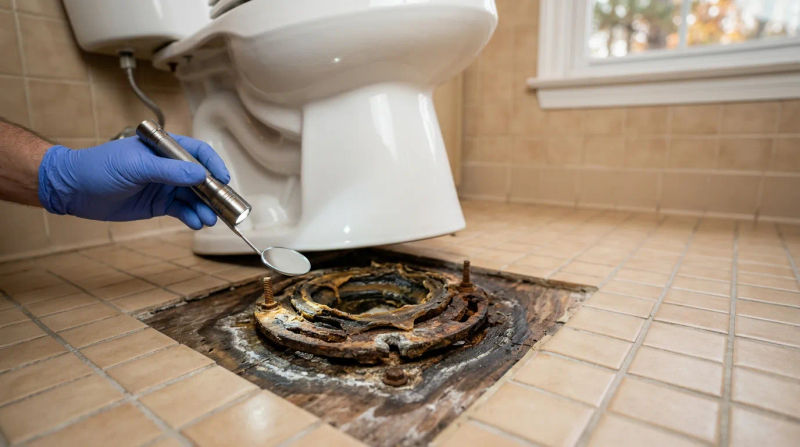
You’re preparing your Stonecrest home for the upcoming holidays. Guests are on their way, and as you do a final cleaning of the guest bathroom, you notice something is off. The toilet shifts slightly when you sit down, a subtle wobble that wasn't there before. Or maybe there’s a faint, unpleasant odor you can't quite place. With the increased traffic our bathrooms see in November, especially in the busy households of this area, these small issues can quickly escalate. What might seem like a minor annoyance could be one of the key toilet flange signs pointing to a failing seal beneath your toilet.
As a home repair specialist with over a decade of experience, I’ve seen how a small leak can lead to significant damage. Understanding the warning signs of a failing toilet flange or wax ring is crucial for preventing costly repairs to your subfloor, or worse, the ceiling in the room below.
Common Signs and Symptoms
The connection between your toilet and the drainpipe is one of the most critical plumbing seals in your home. When it fails, the signs are usually clear, if you know what to look for. Here are the seven most common symptoms our technicians encounter.
- A Wobbling or Unstable Toilet: This is the most frequent complaint we hear about and a classic sign of a toilet wobbling at base Stonecrest residents should not ignore. The toilet should be firmly anchored to the floor. If it rocks or shifts, it means the bolts securing it have loosened or, more likely, the flange they anchor into is broken or compromised. This movement will eventually break the wax seal.
- Water Pooling Around the Base: When you're trying to figure out water around toilet base what to check, start by looking for clean water. If you see small puddles or moisture seeping from under the toilet after flushing, the wax ring is no longer creating a watertight seal. Even a tiny amount of water indicates a leak that will only worsen over time.
- Persistent, Unpleasant Odors: That foul smell you can't scrub away is a major red flag. A primary job of the wax ring is to block sewer gases from entering your home. A persistent wax ring leak smell Stonecrest GA homes sometimes experience is a sure sign the seal is broken, allowing unpleasant and unhealthy gases to escape into your bathroom.
- Water Stains on the Ceiling Below: For the many two-story homes in the Stonecrest area, one of the most alarming signs is a brownish water stain appearing on the ceiling of the first floor. This indicates a slow, steady leak from an upstairs bathroom has been happening for some time, soaking through the subfloor and drywall. By the time you see this, the damage is already significant.
- Damaged or Spongy Flooring: If the flooring around the toilet base feels soft, spongy, or is discolored, it’s a sign of a long-term leak. Water has been seeping into the subfloor, causing it to rot and lose its structural integrity. This requires immediate attention, as it compromises the safety of the floor itself.
- The Toilet Appears Uneven: Look at your toilet from the side. Does it sit level with the floor? If it appears tilted, the flange may have broken on one side, or the subfloor beneath has deteriorated, causing the toilet to sink slightly.
- Visible Damage: In some cases, you might be able to see the problem. Look at the bolts at the base of the toilet. If they are rusted, it’s a sign of chronic moisture. You might even see a visible crack in the plastic or cast-iron flange itself if the toilet has been removed.
What Causes This Problem
Understanding why this failure happens can help you appreciate the importance of a proper repair. The toilet flange is a pipe fitting that connects the toilet to the drainpipe and anchors it to the floor. The wax ring is a simple, malleable ring of wax that sits on the flange and is compressed when the toilet is installed, creating an airtight and watertight seal.
Several factors can cause this system to fail:
- Age: Many homes in our area were built in the 1990s and 2000s. While well-constructed, they are now reaching an age where original components like wax rings are at the end of their lifespan. The wax can dry out, harden, and crack over time.
- Improper Installation: If a toilet was not set correctly, the wax ring may not have been properly compressed, leading to an imperfect seal from day one. Another common issue is when new, thicker flooring (like tile) is installed without extending the flange height, leaving a gap that the standard wax ring can't seal.
- Constant Movement: The toilet wobbling at base Stonecrest homeowners sometimes feel isn't just a symptom; it's a cause. Every time the toilet shifts, it puts stress on the wax ring and the flange bolts, eventually leading to failure.
- Flange Damage: The flange itself can break. Overtightening the bolts can crack the flange, or years of moisture can corrode cast-iron flanges. Once the flange is broken, it can no longer hold the toilet securely, and the seal will fail.
When to Call a Professional
While some homeowners are comfortable with DIY projects, a toilet repair can be deceptive. It seems simple, but the consequences of getting it wrong are significant.
You might be able to perform a simple check by gently tightening the nuts on the toilet bolts. If they tighten and the wobbling stops, you may have caught it early. Do not overtighten them, as this can crack the porcelain or the flange.
However, you should call for professional help if:
- The bolts just spin and won’t tighten (a sign of a broken flange).
- You see any signs of water damage on the floor or ceiling.
- The problem requires lifting the toilet.
Pulling a toilet is a heavy, messy job. More importantly, an experienced professional can properly diagnose the root cause. Our trained technicians follow a standardized process to not only replace the wax ring but also inspect the flange for cracks, check the subfloor for water damage, and ensure the new installation is perfectly level and secure. This prevents a simple wax ring replacement from failing again in six months because the underlying issue - like a cracked flange or rotted subfloor - wasn't addressed.
Conclusion
A wobbly toilet, a mysterious puddle, or a foul odor are more than just minor inconveniences; they are clear warnings that the seal beneath your toilet is failing. Ignoring these toilet flange signs can lead to rotted subfloors, ceiling damage, and unsanitary conditions, especially with the extra strain of holiday guests.
Acting quickly is key. A timely inspection can mean the difference between a straightforward repair and a major restoration project. Don't let a small wobble turn into a big headache.
If you notice any of these signs, contact a local handyman professional for an inspection.